Why Choose Castle Rock?
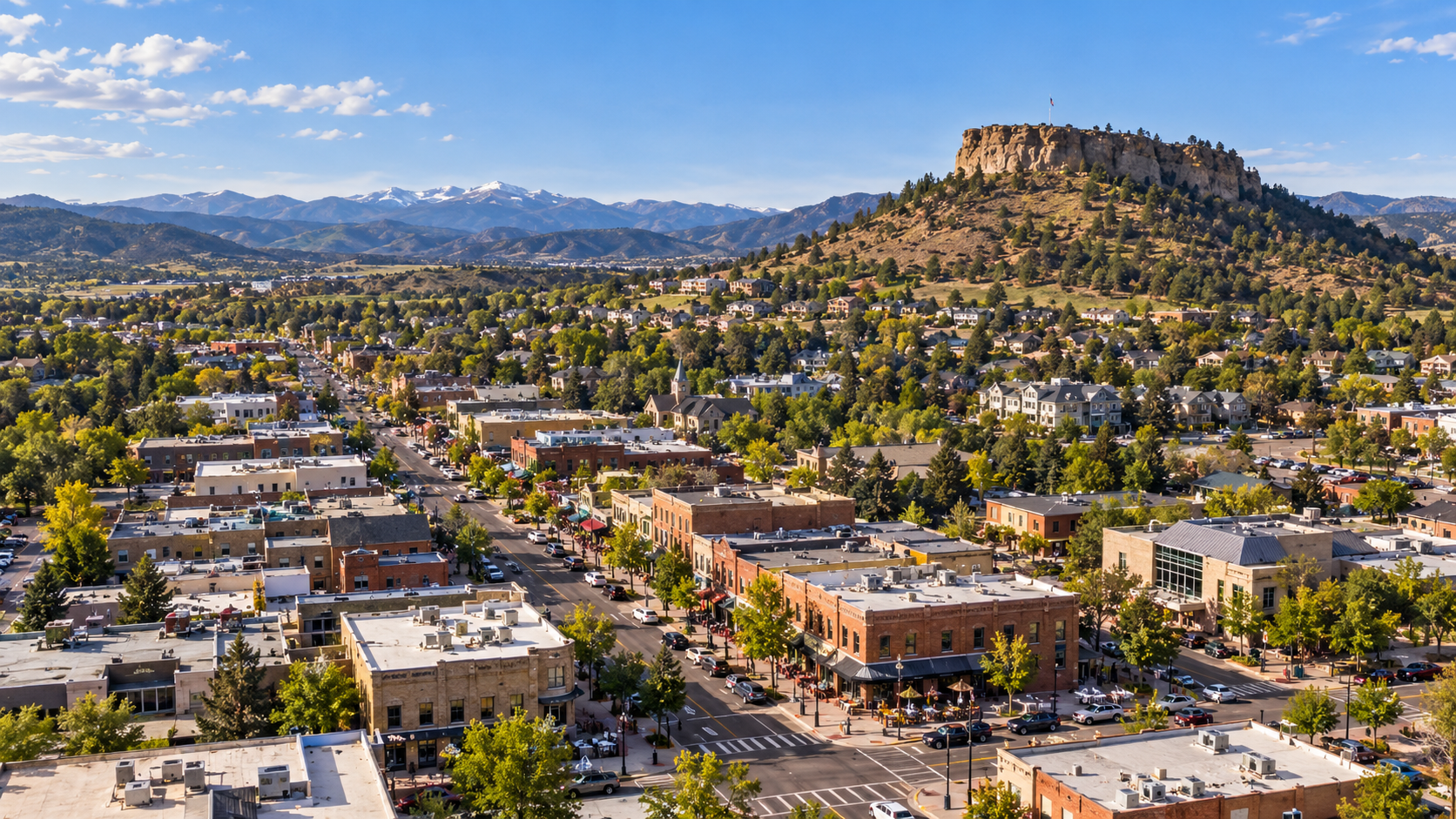
Castle Rock combines suburban living with a distinctive small-town center. Downtown businesses include restaurants, shops, services, and community gathering spaces.
Meanwhile, nearby ridgelines and open spaces create easy access to outdoor recreation.
Cost of Living
Housing represents an important part of a Castle Rock relocation budget. The 2020–2024 median owner-occupied home value was $652,900.
Meanwhile, median gross rent was $2,000. Therefore, movers should compare housing, transportation, utilities, insurance, and HOA expenses carefully.
Real Estate and Housing Market
Castle Rock offers single-family homes, apartments, townhomes, condominiums, and master-planned communities.
Established neighborhoods sit near central Castle Rock. In contrast, communities such as The Meadows, Terrain, and Crystal Valley include newer development.
Before buying, compare HOA rules, commute routes, property condition, and future construction.
Education
Douglas County School District serves Castle Rock and surrounding communities. The district serves about 61,000 students from preschool through twelfth grade.
Families should confirm school assignments before selecting a property. Boundary lines can change as enrollment and development patterns shift.
Healthcare Facilities
AdventHealth Castle Rock provides major hospital care within the community. Services include emergency care, imaging, orthopedics, maternity care, and cancer treatment.
The hospital also operates as a Level III Trauma Center. Therefore, residents have access to significant medical services without traveling into Denver.
Recreation and Leisure
Outdoor recreation is one of Castle Rock’s strongest features. The Town manages 104 miles of trails, 25 parks, and more than 4,000 acres of open space.
Through regional partnerships, residents can access over 130 trail miles and more than 6,900 acres of open space.
Meanwhile, recreation programs include fitness classes, sports, outdoor activities, and seasonal programs.
Dining and Shopping
Historic Downtown Castle Rock offers restaurants, boutiques, professional services, and locally owned businesses.
The Downtown Merchants Association represents roughly 160 businesses. As a result, the town center remains an important shopping and dining destination.
Larger commercial areas elsewhere in Castle Rock provide supermarkets, national retailers, and everyday services.
Events and Festivals
Downtown Castle Rock hosts community events throughout the year. The 2026 calendar included Oktoberfest, Restaurant Week, summer concerts, trolley rides, and the Fangtastic Festival.
Additionally, Jazz in the Park ran during summer months. Seasonal carriage rides continued through the holiday period.
Transportation and Accessibility
Driving remains the primary transportation choice for many Castle Rock residents. Interstate 25 provides the main connection toward Denver and Colorado Springs.
The Crystal Valley interchange is also improving access in southern Castle Rock. Full interchange completion is currently expected in 2027.
Before choosing a neighborhood, compare commute direction and highway access carefully.
Conclusion
Castle Rock combines suburban housing, schools, healthcare, trails, shopping, and Front Range access.
Before relocating, compare housing costs, school boundaries, commute routes, HOA requirements, and neighborhood amenities. Overall, Castle Rock suits residents seeking suburban living between Denver and Colorado Springs.