Why Choose Centennial?
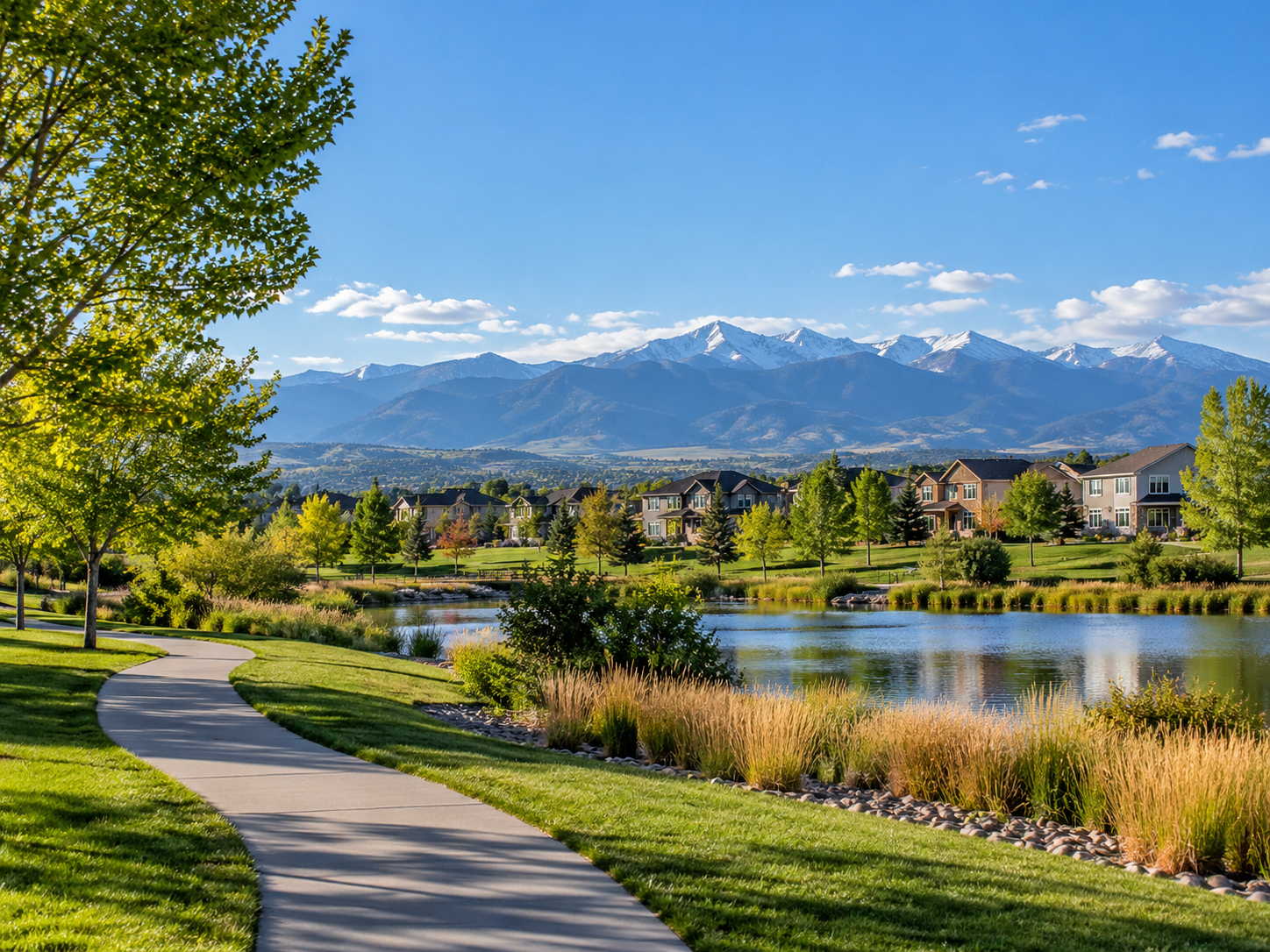
Centennial combines suburban neighborhoods with major employment and commercial areas. Additionally, residents have access to open space, trails, restaurants, and regional transportation.
Different parts of the city offer distinct settings. Meanwhile, development near I-25 continues adding mixed-use housing, businesses, and public spaces.
Cost of Living
Housing represents an important part of a Centennial relocation budget. The 2020–2024 median owner-occupied home value was $658,100.
Meanwhile, median gross rent was $2,148. Therefore, movers should compare housing, transportation, utilities, insurance, and HOA expenses carefully.
Real Estate and Housing Market
Centennial offers single-family homes, apartments, condominiums, townhomes, and newer mixed-use developments.
Established neighborhoods are found throughout the city. In contrast, areas near Dry Creek Station continue preparing for more walkable development.
Before buying, compare commute routes, HOA requirements, property condition, and neighborhood services.
Education
Cherry Creek School District and Littleton Public Schools serve Centennial residents. School assignments depend on the property location.
Therefore, families should confirm district and school boundaries before choosing a home. The city’s property-search tool also identifies the school district for individual addresses.
Higher education resources are available throughout the Denver metro area.
Healthcare Facilities
Centennial has local primary care and medical services. UCHealth CU Medicine Family Medicine – Centennial provides primary and preventive care within the city.
Additionally, HCA HealthONE Centennial operates a full-service medical facility on Arapahoe Road. The campus expanded into a 20-bed hospital facility in 2021.
Nearby AdventHealth Littleton provides another major hospital option. Its emergency department operates as a Level II Trauma Center.
Recreation and Leisure
Centennial owns nearly 144 acres of parks and open space. Residents also use recreation areas maintained by regional park districts.
Centennial Center Park is a 15-acre community destination with lawns, playgrounds, trails, an amphitheater, and a seasonal splash pad.
Additionally, trails and nearby open spaces provide walking, cycling, and outdoor recreation across the south metro area.
Dining and Shopping
The Streets at SouthGlenn is one of Centennial’s major mixed-use destinations. It combines shopping, dining, housing, and employment.
Meanwhile, commercial areas near I-25, Smoky Hill Road, and Arapahoe Road provide more restaurants and everyday services.
Events and Festivals
Centennial hosts concerts, arts programs, food events, and seasonal activities throughout the year.
The 2026 event series included Centennial Under the Stars, the Chalk Art Festival, and Sip in Centennial. Additionally, Centennial Center Park serves as a major community event venue.
Transportation and Accessibility
Driving remains common throughout Centennial. Interstate 25, E-470, and major arterial roads provide important regional connections.
However, RTD provides bus, rail, and other transportation services. Dry Creek Station is located within Centennial and serves regional light rail.
Additionally, local transportation options include FlexRide and connections to the wider Denver metro transit network.
Conclusion
Centennial combines suburban housing, schools, healthcare, parks, shopping, and Denver-area transportation.
Before relocating, compare housing costs, school districts, commute routes, HOA requirements, and neighborhood amenities. Overall, Centennial offers convenient South Metro living with strong regional access.