Why Choose Longmont?
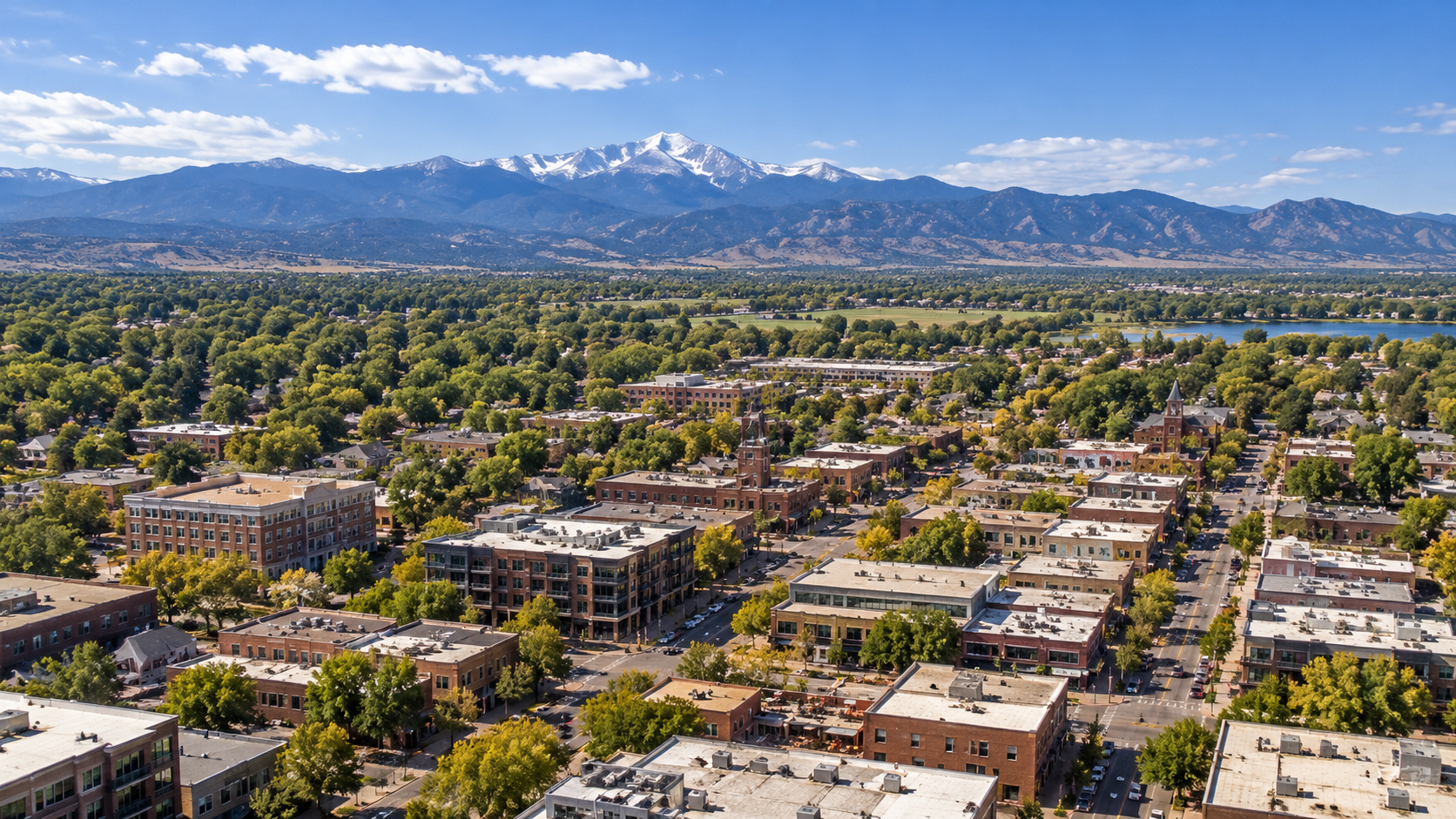
Longmont combines a smaller-city atmosphere with convenient Front Range access. Additionally, downtown features restaurants, breweries, shops, arts, and community events.
Neighborhoods range from established residential areas to newer developments. Meanwhile, Longs Peak and the surrounding mountains create a distinctive western backdrop.
Cost of Living
Housing represents an important part of a Longmont relocation budget. The 2020–2024 median owner-occupied home value was $572,800.
Meanwhile, median gross rent was $1,816. Therefore, movers should compare housing, utilities, transportation, insurance, and HOA expenses carefully.
Real Estate and Housing Market
Longmont offers single-family homes, apartments, condominiums, townhomes, and newer residential communities.
Established neighborhoods are found near downtown and central Longmont. In contrast, newer housing continues expanding around outer sections of the city.
Before buying, compare commute routes, property condition, HOA requirements, and neighborhood services.
Education
St. Vrain Valley Schools serves Longmont and nearby communities. The district offers elementary, middle, and high school choices throughout the region.
Families should confirm current attendance boundaries before choosing a property. The district provides an online boundary tool for individual addresses.
Healthcare Facilities
UCHealth Longs Peak Hospital provides major hospital services within Longmont. The 89-bed acute-care hospital offers emergency, surgical, heart, imaging, orthopedic, and maternity care.
Additionally, the hospital operates as a Level III Trauma Center. Nearby Longs Peak Medical Center provides specialty and outpatient services.
Recreation and Leisure
Longmont provides parks, greenways, pools, recreation centers, and trails throughout the city. Recreation programs include fitness classes, swimming, sports, camps, and community activities.
The city’s greenway system follows rivers, creeks, lakes, and other natural corridors. Meanwhile, trails such as the St. Vrain Greenway provide walking and cycling opportunities.
Residents can also use city maps to find parks, bike routes, and public open spaces.
Dining and Shopping
Downtown Longmont offers locally owned restaurants, breweries, tasting rooms, shops, and creative businesses. The district also hosts frequent live music and community activities.
Meanwhile, larger commercial corridors provide supermarkets, shopping centers, and everyday services throughout the city.
Events and Festivals
Longmont hosts community events throughout the year. The 2026 calendar included Independence Weekend, the Day of the Dead Celebration, the Halloween Parade, Turkey Trot, and Longmont Lights.
Additionally, summer events included concerts, family activities, and downtown gatherings. These programs help keep the city active across different seasons.
Transportation and Accessibility
Driving remains common in Longmont. However, the city also offers several public transportation options.
Ride Free Longmont provides free trips on local RTD routes 323, 324, 326, and 327. Meanwhile, RIDE Longmont offers affordable on-demand transportation throughout the city.
FLEX connects Longmont with Berthoud, Loveland, and Fort Collins. Additionally, RTD launched direct SkyRide service from Longmont to Denver International Airport in September 2026.
Conclusion
Longmont combines mountain scenery, housing variety, healthcare, schools, parks, downtown amenities, and regional transportation.
Before relocating, compare housing costs, school boundaries, commute routes, HOA requirements, and neighborhood services. Overall, Longmont offers practical Front Range living between Boulder and Northern Colorado.